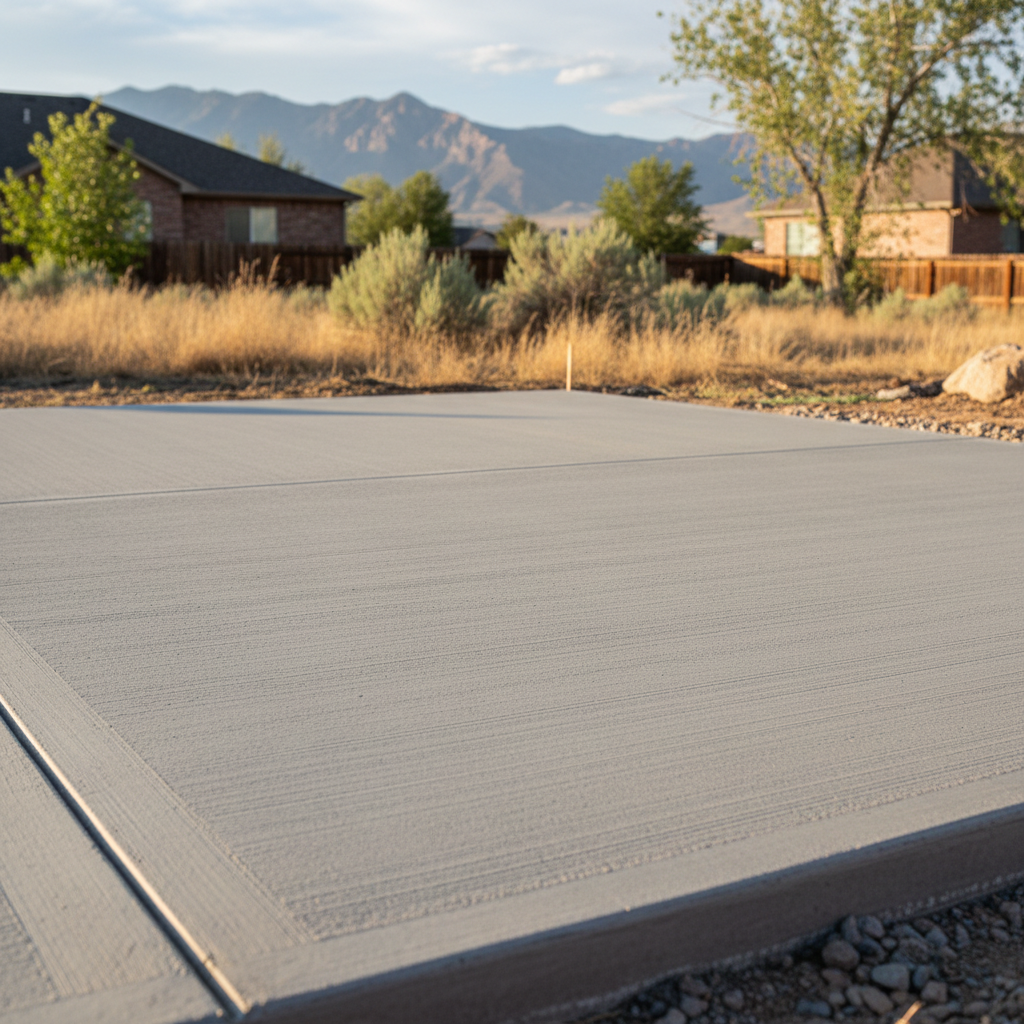
Alright, let's talk concrete. As a contractor here in West Valley City, I get a lot of the same questions popping up when folks are thinking about new driveways, patios, or even just fixing up a sidewalk. It's good to ask! After all, you're making a big investment, and you want it done right. So, I've put together some straight answers to the questions I hear most often. No fluff, just what you need to know.
What's the deal with concrete cracking? Is it normal?
Yeah, concrete cracking is pretty normal, at least to an extent. It's not a sign of bad work every single time. Concrete shrinks as it dries and cures, and that shrinkage creates stress. If that stress isn't relieved, it cracks. That's why we put in control joints – those lines you see cut into new concrete. They're designed to give the concrete a designated place to crack, usually in a straight line that's less noticeable and less damaging than a random, jagged crack. If you're seeing a lot of wide, uneven cracks, or if they're raising up, then you might have a bigger issue, like subgrade movement or improper installation. But a few hairline cracks in the middle of a slab, especially in our climate where we get those big temperature swings? That's often just concrete being concrete, plain and simple.
How long does new concrete need to cure before I can drive or walk on it?
This is a big one, and it's super important to get right. For walking on it, you're usually good to go after about 24-48 hours, especially in decent weather. But for driving a car on it? You really need to wait at least 7 days, and honestly, 28 days is even better for full strength. That's when the concrete reaches its design strength. I know it's a pain to park on the street or in the grass for a few weeks, but trust me, driving on it too soon can cause permanent damage. We're talking tire marks, surface spalling, or even structural cracks. It's just not worth rushing it. Give it time to do its thing.
What's the difference between standard gray concrete and decorative concrete?
Standard gray concrete is pretty self-explanatory, right? It's your basic, functional concrete for driveways, sidewalks, garage floors. It does the job, it's durable, and it's generally the most cost-effective option. Decorative concrete, on the other hand, is where we get a little more creative. This includes things like stamped concrete, which mimics the look of stone, brick, or wood. Or maybe colored concrete, where pigments are added to the mix for a custom hue. Exposed aggregate, which shows off the natural stones in the mix, is another popular choice. It's all about making things look better. For a lot of homes in places like the Granger area, decorative concrete can really boost curb appeal and make your outdoor spaces pop. It costs more, of course, but the visual impact can be huge.
Do I need to seal my concrete, and if so, how often?
Yes, absolutely, you should seal your concrete, especially here in West Valley City. Our freeze-thaw cycles are brutal on concrete. Water gets into those tiny pores, freezes, expands, and then thaws, causing the surface to spall or flake off over time. A good quality sealer acts as a protective barrier against moisture, chemicals, oil, and even UV rays. It also makes it easier to clean. I generally recommend sealing new concrete after it's fully cured (about 28 days), and then resealing every 2-3 years, depending on the traffic and exposure. It's a small investment that makes a huge difference in the lifespan and look of your flatwork.
Can you pour concrete directly over an old concrete slab?
You can, but it's usually not the best idea, and I rarely recommend it for flatwork like driveways or patios. The biggest problem is that any cracks or movement in the old slab will almost certainly reflect through to the new layer. It's called 'reflective cracking.' Plus, you're adding weight and potentially creating drainage issues if the new slab is too high. In most cases, it's better to remove the old concrete and prepare a proper subgrade. That way, you're starting with a clean slate and can ensure a much longer-lasting, stable surface. There are some specific situations where a thin overlay might work for minor cosmetic fixes, but for structural flatwork, rip it out and do it right.
What kind of preparation goes into the ground before pouring concrete?
This is probably the most overlooked but most critical part of any concrete job. Good subgrade preparation is everything. First, we excavate the area to the right depth. Then, we make sure the ground is properly graded for drainage – you don't want water pooling up against your house or in your driveway. After that, we compact the soil. This is huge, especially with some of the clay soils we have around here. If the ground isn't compacted evenly, you'll get settling, and that leads to cracks and uneven slabs. Sometimes we'll add a layer of gravel or road base, compact that too, and then put down a vapor barrier if it's an interior slab or if moisture is a concern. All this groundwork is what makes your concrete last for decades, and it's where Kingdom Concrete really focuses its efforts.
How do I clean my concrete without damaging it?
Keeping your concrete clean isn't too hard, but you want to use the right approach. For general dirt and grime, a good stiff broom and a hose with some dish soap usually does the trick. For tougher stains like oil or grease, you can use a degreaser specifically designed for concrete. Always test it in an inconspicuous spot first. Pressure washing can be effective, but be careful not to use too high a pressure or hold the nozzle too close, especially on older or decorative concrete, as you can damage the surface or even etch it. Start with a wider fan tip and lower pressure, and work your way up if needed. And if you've got a sealed surface, cleaning is usually even easier.
There you have it. These are the main things I get asked, and hopefully, these answers help you feel more confident about your next concrete project. If you've got more questions, or you're ready to get a quote, give us a call.